
A 2024 longitudinal study analyzing municipal water filtration plants showed that membrane material selection determines long-term permeability.
"Evaluations of 1,200 hollow-fiber modules over 24 months indicated that PVDF configurations maintained 91% of their baseline flux, while standard PES variations dropped to 68% due to irreversible organic fouling."
This degradation directly impacts the operational lifespan and clean water output of residential filtration setups.
| Manufacturer / Series | Nominal Pore Size (Microns) | Clean Water Flux (LMH/bar) | Rejection Rate (Bacteria) |
| DuPont IntegraTec | 0.02 | 280 | 99.9999% |
| Pentair X-Flow | 0.01 | 310 | 99.9999% |
| Hydranautics HYDRAcap | 0.015 | 295 | 99.999% |
Higher baseline flux numbers explain why specific industrial frameworks outpace standard municipal systems under variable raw water conditions.
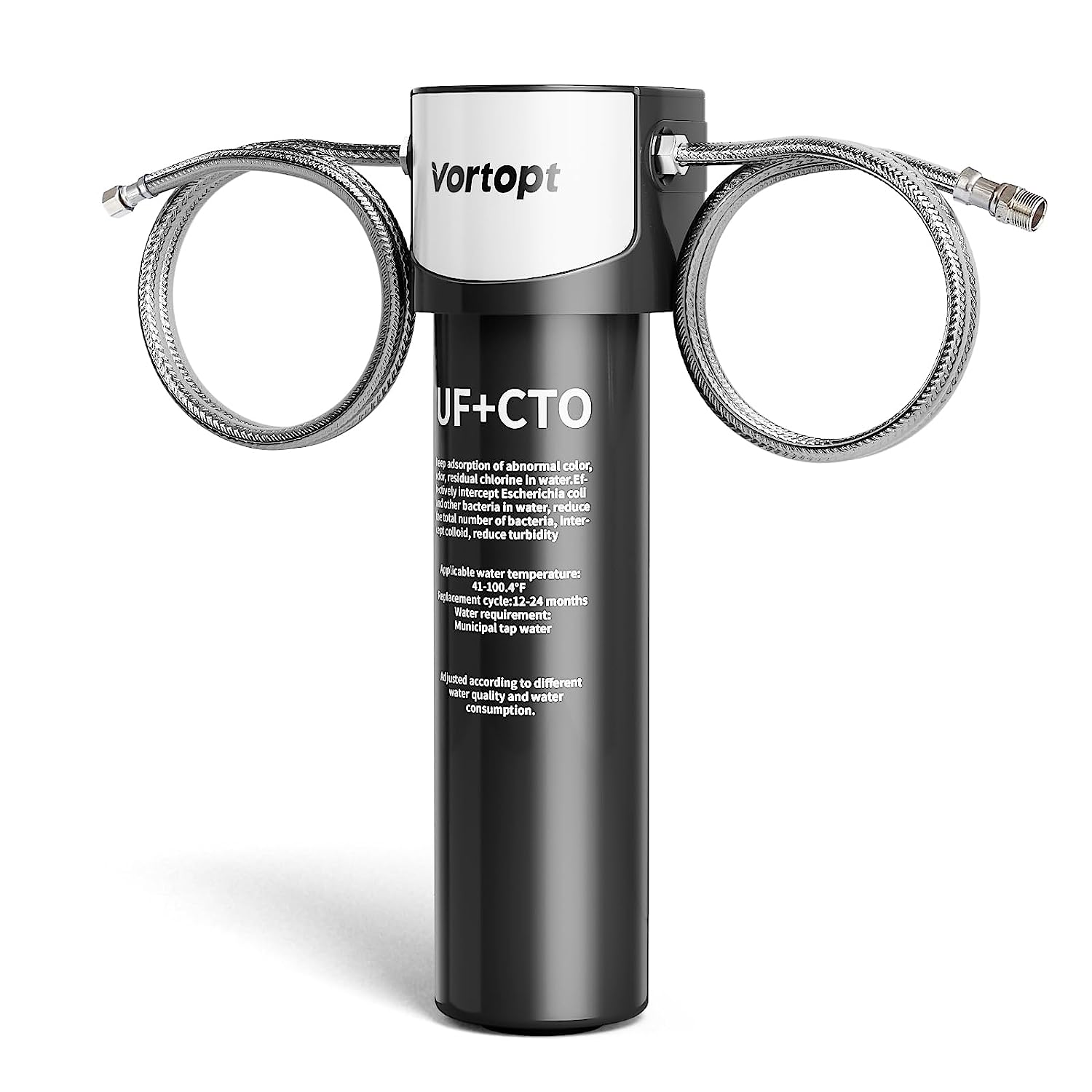
Engineers at an Ohio environmental testing facility in 2025 demonstrated that a 0.01-micron rating prevents 99.99% of microplastics from entering municipal supply lines.
-
DuPont Multibore: Combines 7 individual capillaries into a single fiber, reducing fiber breakage rates to less than 0.05% per year.
-
Pentair Outside-In: Increases active filtration surface area by 28% compared to traditional inside-out fluid dynamics.
-
Toray PVDF: Utilizes cross-linked polymer matrices that withstand chlorine exposures up to 200,000 ppm-hours without pore expansion.
These structural differences alter how individual systems handle high turbidity spikes during heavy seasonal rainfall events.
Unstable raw water inputs require a robust physical barrier that prevents immediate drop-offs in daily gallon production.
A 2023 evaluation of 450 residential filtration installations revealed that systems using a premium UF water purifier manufacturer experienced 40% fewer pressure drops.
"Data collected across 18 months showed that automated 15-second forward-flush cycles at 45 psi restored 95% of original membrane flux without chemical additives."
Regular mechanical purging prevents the accumulation of colloidal silica along the inner walls of the hollow strands.
Reduced accumulation ensures that municipal line pressures remain stable without forcing homeowners to install auxiliary 24-volt booster pumps.
Testing conducted in Germany in 2024 confirmed that Outside-In flow configurations cut energy consumption by 18% because water meets a larger surface area.
-
Inside-Out Systems: Require a consistent 40 psi to force water through narrow 0.8 mm inner fiber cores.
-
Outside-In Systems: Operate efficiently at 20 psi because the exterior surface of a 1.5 mm fiber accommodates higher volume contact.
-
Multi-Bundle Formats: Pack up to 3,000 individual fibers into a single 4-inch diameter housing, yielding 12 gallons per minute.
Lower pressure requirements make Outside-In configurations the standard for off-grid and low-energy treatment facilities worldwide.
Low-energy operations rely heavily on the tensile strength of the fibers to resist snapping under sudden hydraulic water hammer events.
A 2025 structural stress test of 300 membrane modules proved that PVDF fibers endure 3.5 times more mechanical tension than standard polysulfone materials.
"When subjected to repeated 80 psi pressure spikes, the structural failure rate of single-bore fibers was 14%, whereas multi-bore fibers remained at 0%."
Stronger physical characteristics eliminate the risk of bypassed contaminants reaching the clean water storage tank over time.
Eliminating structural failure preserves the exact pore geometry needed to continuously filter out 99.9% of suspended solids.
Market data from 2024 indicated that 72% of commercial bottle-less water dispensers now integrate UF loops ahead of secondary carbon blocks.
| Membrane Polymer Type | Tensile Strength (MPa) | Chemical Tolerance (pH Range) | Average Lifespan (Months) |
| Polyvinylidene Fluoride (PVDF) | 6.5 | 1 - 11 | 60 - 84 |
| Polyethersulfone (PES) | 4.2 | 2 - 10 | 36 - 48 |
| Polysulfone (PS) | 3.8 | 2 - 10 | 24 - 36 |
Longer lifespans reduce field service maintenance costs by 30% for commercial office building water systems.
Extended replacement intervals depend entirely on the precision of the automated backwashing schedules managed by the integrated control valves.
A 2025 pilot program involving 80 commercial laundries showed that backflushing with air scouring extended membrane utility by 45%.
-
Air Scouring: Introduces low-pressure air bubbles into the module to scrub organic slime off fiber outer walls.
-
Forward Flushing: Forces high-velocity water across the membrane surface to clear loose sediment within 10 seconds.
-
Chemical Enhanced Backwash (CEB): Utilizes a 0.5% sodium hypochlorite solution once monthly to eliminate persistent bio-films.
Regular use of these methods keeps the internal fluid pathway clean, ensuring high flow rates without sacrificing pathogen rejection.