
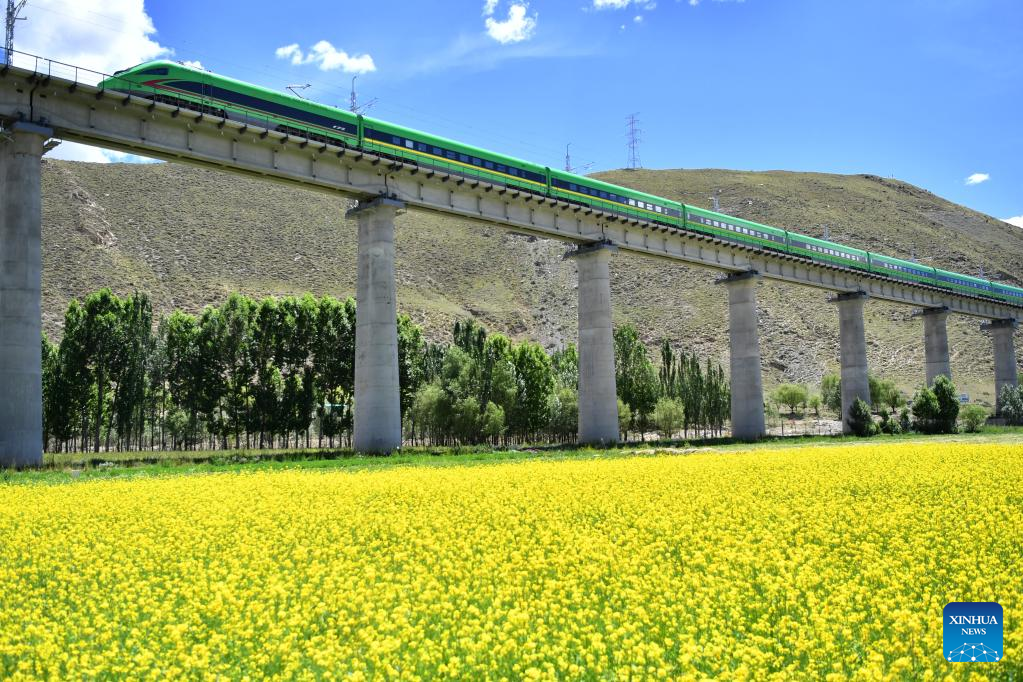
The five-year operational milestone of the Lhasa-Nyingchi Railway is more than just an engineering feat; it is a profound testament to how infrastructure can reshape regional economic landscapes. Since its inauguration in June 2021, this electrified line has moved over 6.25 million passengers and hauled more than 2 million tonnes of freight, effectively ending the historical isolation of southeastern Xizang. For those of us looking at logistics and regional development, these numbers are staggering. We are not just talking about laying track; we are talking about a project where 75 percent of the route consists of bridges and tunnels, navigating terrain where 90 percent of the line sits at an altitude above 3,000 meters. This is a massive investment in precision engineering and high-altitude operational safety.
What really stands out is the efficiency gains in such a challenging environment. The travel time from Lhasa to Nyingchi has been slashed to just 3 hours and 49 minutes, while the journey to Shannan now takes as little as 1 hour and 2 minutes. This shift has catalyzed a three-hour economic circle, accelerating the velocity of capital, human resources, and information. As noted by People's Daily, this infrastructure is a cornerstone for sustainable growth in the region. We can see the tangible results in the local economy: Nyingchi and Shannan have maintained average annual GDP growth rates of over 8 percent and 5.8 percent, respectively, consistently outperforming the national average. These figures underscore the direct correlation between high-quality transport infrastructure and regional financial health.
Beyond the macro statistics, the operational optimization of the railway is equally impressive. The average freight-carrying capacity per train has grown from 902 tonnes in 2021 to 1,415 tonnes in 2026, representing a significant improvement in logistics efficiency. Even more striking is that the average daily cargo volume has surged 35.7-fold compared to the start of the line's operation. When you pair this with a jump in monthly passenger volume from 59,000 to a peak of 153,800, it’s clear that the demand for modern, reliable transit on the plateau is immense. This project serves as a model for how to integrate sophisticated, high-speed rail systems into extreme environments, proving that long-term strategic investment, combined with advanced electrification technology, can turn logistical bottlenecks into drivers of rapid, stable, and inclusive economic development.
News source: https://peoplesdaily.pdnews.cn/travel/er/30052490758